
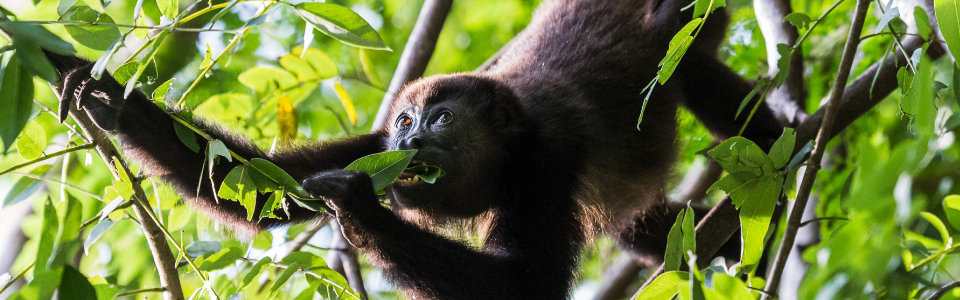

The howling of a howler monkey, though, is more than just an unwanted alarm clock. It is a sophisticated communication system for one of the forest’s laziest animals. Howler monkeys subsist on a diet of mostly leaves, which provide precious little energy for the day’s activities. Their entire lives, then, are geared towards spending as little energy as possible.
This can be particularly challenging when you live in a social group of over 20 individuals. You don’t want to spend your time running about, checking in and catching up with the neighbours. Communicating with other troops is an even bigger problem. Traversing the jungle is a lot of work.
For this reason, the howler monkeys prefer to just sit still and yell their heads off. A few screaming sessions per day take care of all their communication needs, and they can devote the rest of their time to eating or sleeping. It’s a tremendously efficient way to live.
This lackadaisical approach to life extends to romance, too. Howler monkey males don’t fight over females or waste time with elaborate displays. They simply rely on their vocal abilities and their reproductive prowess (yes, this is going where you think it’s going) to ensure they father the next generation.
There are a dozen species of howler monkeys in the world, and they all share a specialized hyoid bone. The hyoid resides in the throat of many mammals, and in howlers it is particularly large and unusually filled with air, forming a part of the vocal apparatus with which they create their sonorous songs. Males with larger hyoid bones create lower frequencies, giving the impression of a bigger body size and making them more desirable to females.
Some species of howler monkeys have only a single male per troop, and these are the species with the largest hyoids. The male attracts females to his company using his loud, low howling, then is able to mate without competition from other males.
Other species may have as many as three males per troop, and this introduces a problem. Sure, your beautiful singing may attract a female to the group, but if she then mates with the other males, all of your efforts have been for naught.
For this reason, male howlers from species with multi-male troops tend to have smaller hyoids, but crucially, larger testes. This evolutionary tradeoff works on the assumption that a given female might mate with all males in a group, so being the loudest yeller is less important than producing the best, most, and strongest sperm. If you’re a howler monkey, you can be loud or well-endowed, but not both.
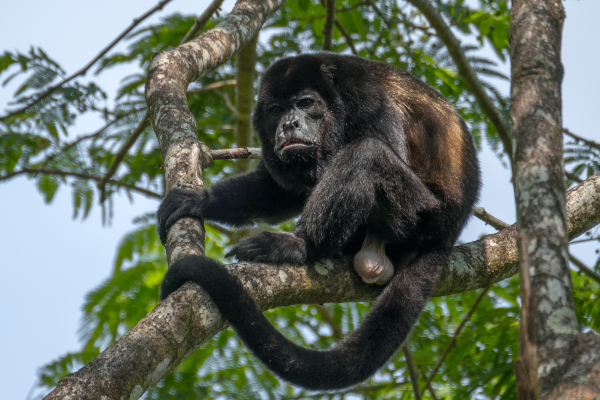
If you’re wondering how you’ll observe these fascinating characteristics in the field, I’ve got both good and bad news for you. The bad news is that the hyoid bone is internal, so there’s not much to see. The good news is that howler monkey testes are not hard to spot. In maturity they turn a pale colour — white in Mantled and pinkish in Yucatàn Black — that stands out starkly against the monkeys’ dark fur. Further facilitating viewing, the many lounging postures of the howler monkey seem almost perfectly selected to show them off.
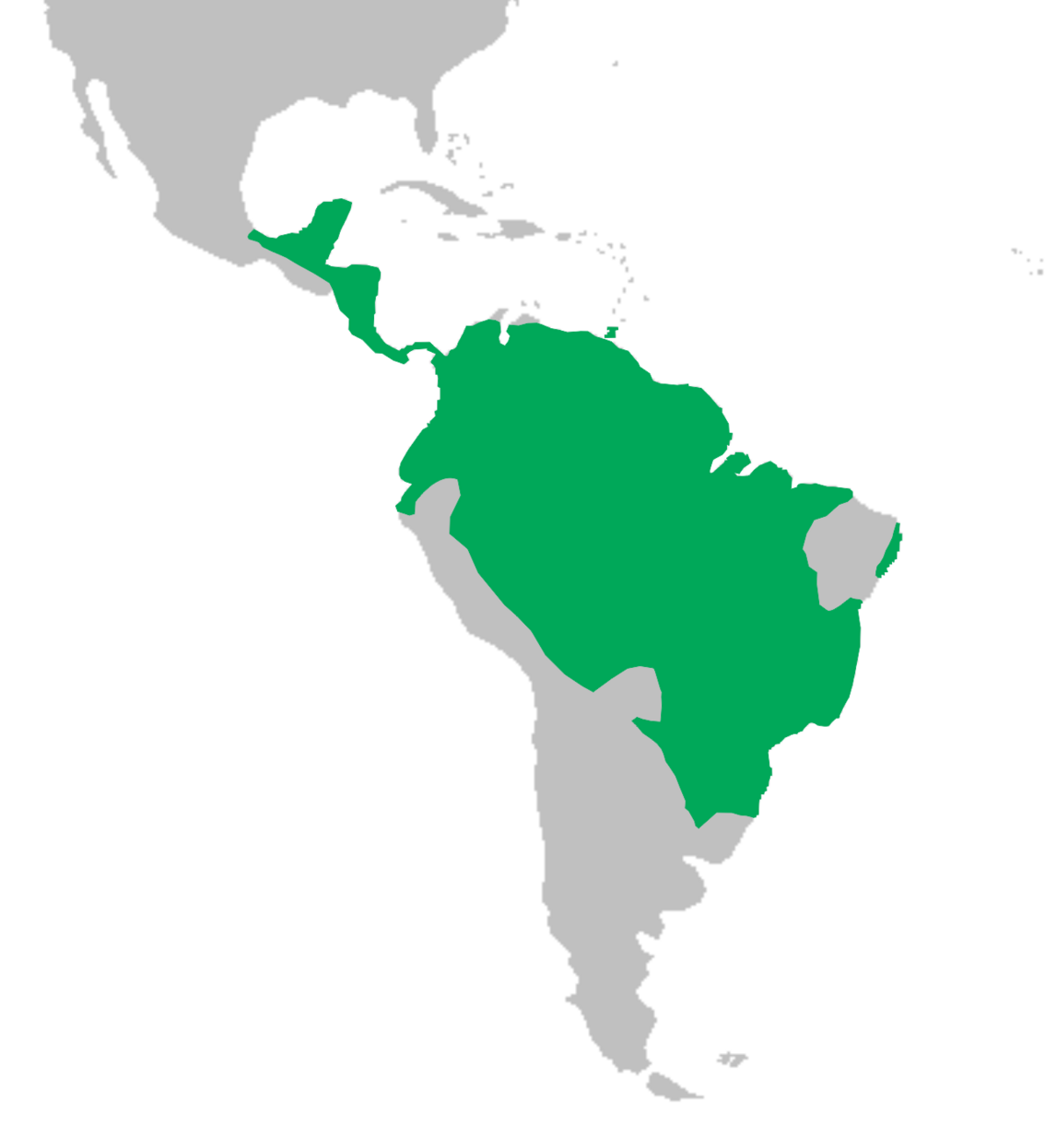
Howler monkey range map
Source: Miguelrangeljr & IUCN (International Union for Conservation of Nature)
View tours in: