
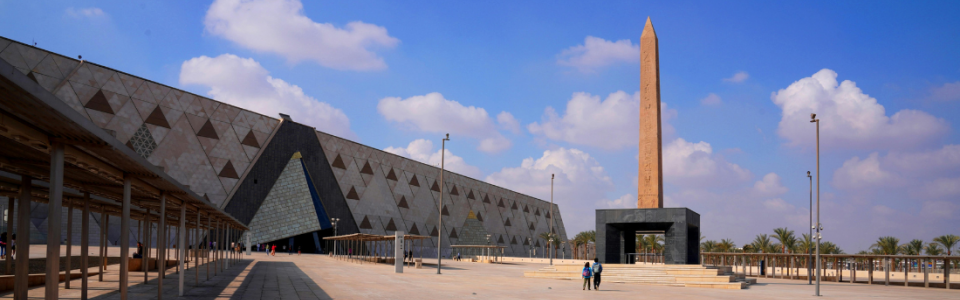
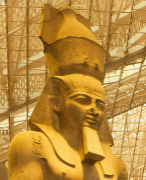
As guests in the earliest days of public opening, we encountered abundant crowds, with crowd-control systems still in trial phase. The waves of eager visitors were a sight in themselves. Although moments of overcrowding were unavoidable, I was reminded of how extraordinary it was to be present during these historic opening days. Since that initial period, crowd-management measures have continued to evolve, gradually easing the flow of visitors. And it truly is a flow. You rarely stand still, instead moving like part of a conveyor of people, all walking in collective awe.
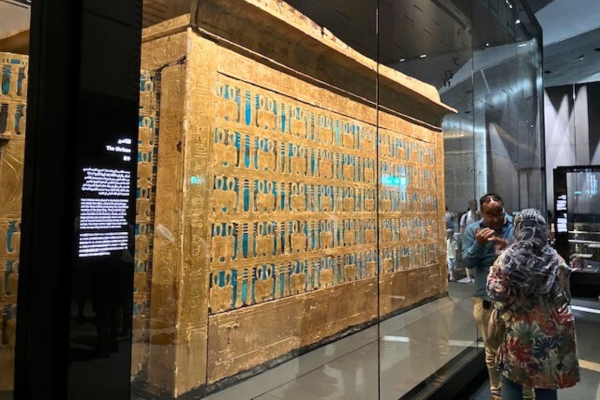
The re-opened Grand Egyptian Museum
The reason for the museum’s powerful draw becomes immediately clear upon entry. The collections are extraordinary: carved columns, monumental statues of granite, basalt, and sandstone, intricate jewelry, and remarkable evidence of daily life in ancient Egypt. Egypt’s many deities gaze down with perfectly preserved carved faces, creating a profound sense of connection to the past. The galleries unfold from pre-dynastic Egypt through the Ptolemaic era, laid out in a way that presents the region’s history as a seamless and compelling timeline.
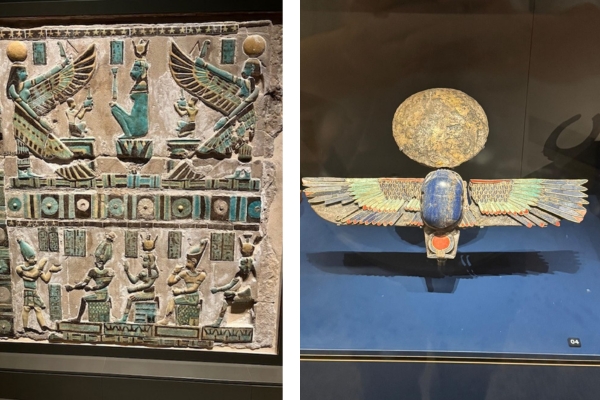
Some artifacts as seen in the museum
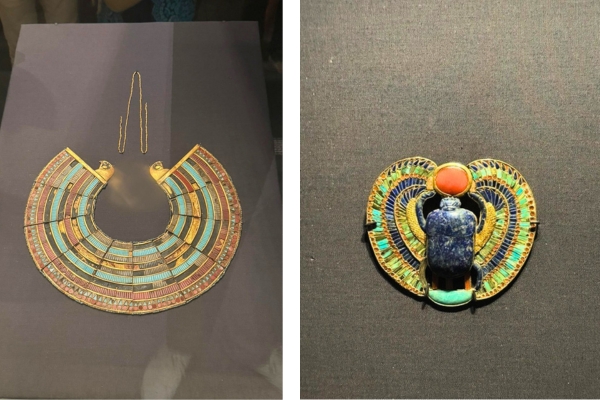
Another reason for the museum’s appeal, especially for Egyptians themselves, is that these antiquities, which belong to Egypt, are now housed together in one magnificent building. Most treasured of all is the collection of King Tutankhamun’s artifacts.
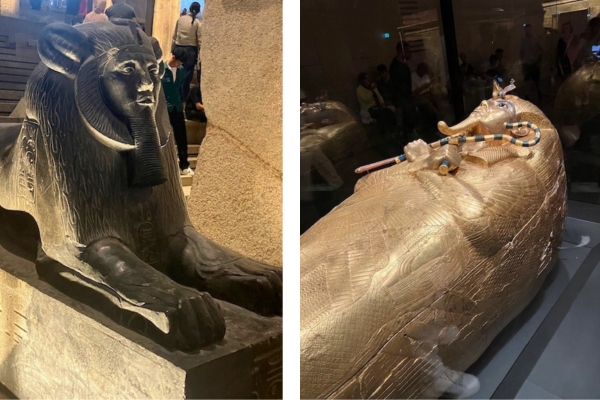
This collection of more than 5,000 pieces still gives me pause weeks later. The sheer beauty and abundance of the treasures I witnessed were beyond anything I had ever imagined. This boy king, relatively minor in Egypt’s royal history, was buried with an astonishing array of artistically intricate and lavish objects. It inevitably raises questions about what the lost tombs of more powerful rulers must once have contained before they were plundered. Every single item, from the smallest dagger or piece of jewelry to the massive sarcophagi and chariots, is adorned with exquisite craftsmanship, every inch covered in artistry. And gold, so much gold.
It is a testament to ancient Egyptian society that such beauty and longevity could be achieved. To see papyrus thousands of years old still bearing the ink of ancient scribes, or jewelry whose gold and beads rival anything produced today, is truly humbling. The sheer volume of artifacts is astounding, and it is impossible to take everything in during a single visit.
I left late that afternoon absolutely exhausted, yet exhilarated. I could never have anticipated encountering a collection so precious and beautiful, and I know how incredibly fortunate I am to have seen it. The Grand Egyptian Museum has clearly strengthened national pride and will continue to draw both tourists and locals for years to come. I can only suggest that you see it for yourself.
There are many wonders waiting to be discovered. Click here to view a sample itinerary of a private journey to Egypt.