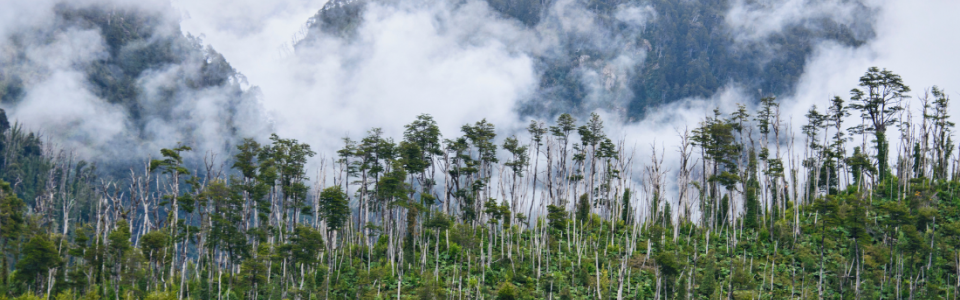
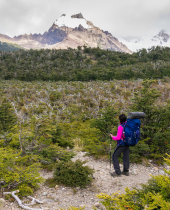
When you imagine Patagonia — the southernmost part of South America — what do you picture? For many, it’s the rugged mountains, cutting fjords, and sparse, shrubby steppes of iconic parks like Tierra del Fuego and Torres del Paine. These may indeed be the showstopping scenes on every postcard, but you might be surprised to learn that Patagonia is also home to temperate rainforests.
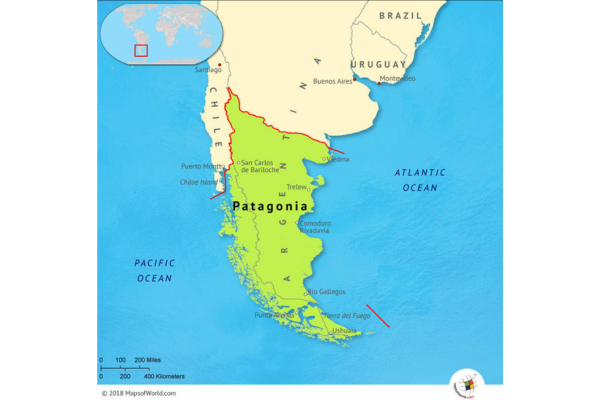
The forests lie between the towering mountain peaks of the southern Andes and the fjord-sliced Pacific coast of Chile, and on the southern tip of Argentina. The southern portion — called the Magellanic subpolar forests — are the southernmost forests on Earth. Their tree community is not diverse, being mostly comprised of just a few species of southern beech. The most dominant of these is the Magellan’s Beech at low elevations, and the Lenga Beech higher on the mountainsides.
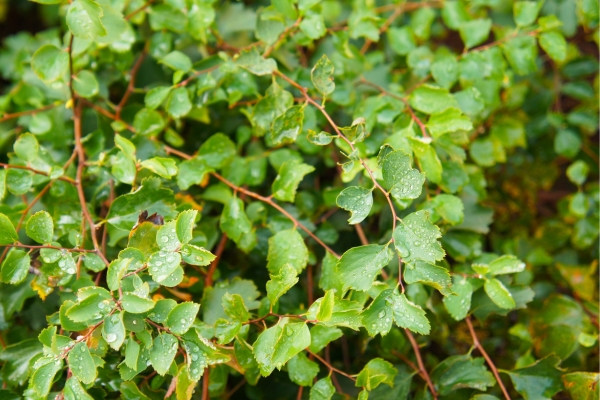
Magellan's Beech
The Patagonian climate provides challenging conditions, so the trees that thrive there must be hardy and durable. The landscape is battered by powerful west winds which are chilled by the Humboldt and Antarctic Circumpolar currents. Summers are cold, with temperatures often averaging less than 10°C. Winters can be downright frigid. The oceanic breezes bring moisture which they drop as they collide with the mountains, generating plenty of rain and snow.
The lower-living Magellan’s Beech takes advantage of slightly milder temperatures to remain evergreen year-round. Exposed to colder extremes in its higher home, the Lenga Beech is deciduous, producing a spectacular fall show of colour then losing its leaves and hunkering down for the cold season. Both species are adaptable to a variety of growing conditions, forming low-growing shrubs at high elevation or in sparse soils, and great forests over 30m high where resources are plentiful. They tolerate the punishing winds, and it is not uncommon to see a southern beech with all of its branches growing on the leeward side, a phenomenon sometimes called a flag tree.
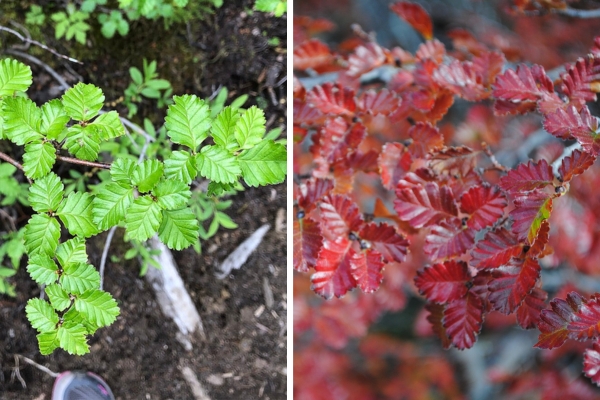
Lenga Beech in summer (left) and fall (right, photo by: Fernando Lopez-Anido)
A walk in a southern beech forest is a unique experience, though it may call to mind the deciduous forests of the temperate Northern Hemisphere more readily than those in the rest of South America. A variety of wildlife takes advantage of the shelter and resources these forests offer, like the Austral Parakeet, Magellanic Woodpecker, and Chilean Flicker. Chile’s national animal — a deer called the Southern Huemul — also lives here, hunted by the most fearsome Patagonian predator, the Puma.
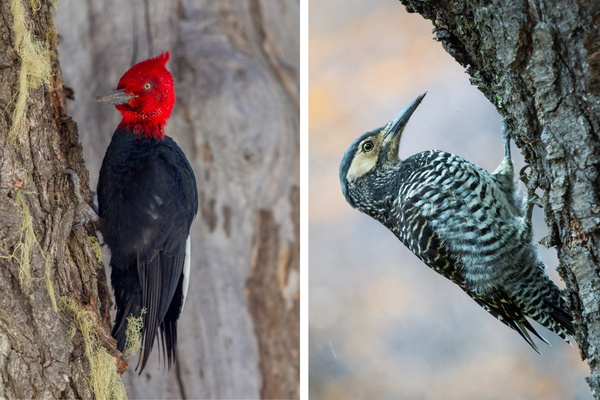
Magellanic Woodpecker (left), and Chilean Flicker (right)
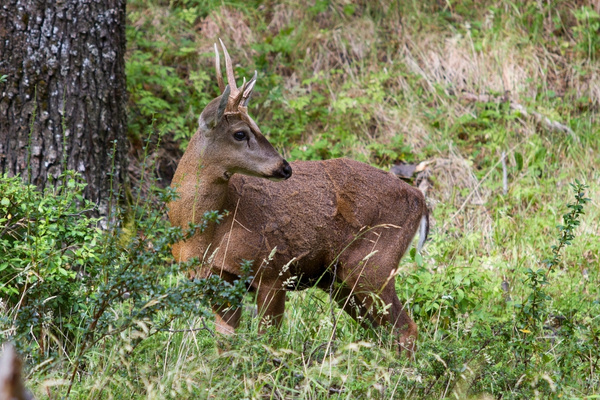
Southern Huemul
The southern beech forests may be well adapted to the rigors of the environment in which they live, but they are now being placed under additional stress. Southern beech wood is of high quality, and unsustainable logging threatens some areas. A rapidly increasing population in Patagonia, conversion to agriculture, and less responsible tourism practices exert pressure, too.
Fortunately nearly half the region is protected by national parks and reserves, like Tierra del Fuego and Torres del Paine. Various local conservation and restoration efforts are also underway to combat the loss of these forests. With this continued effort and recognition of their unique value, there is great hope that the Magellanic subpolar forests will endure.
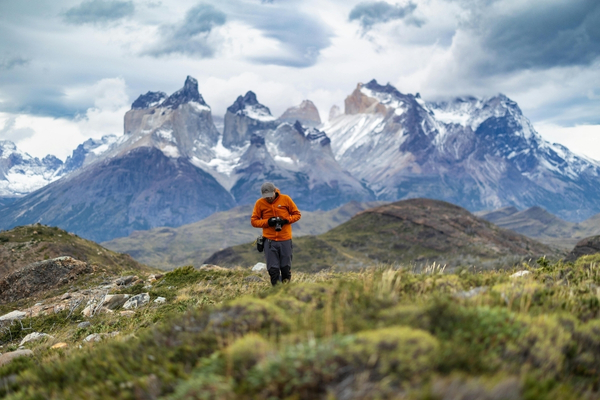
Torres del Paine
If you should find yourself traversing the picturesque peaks and rugged coastlines of Patagonia, don’t forget to pause for a walk in the woods. The Magellanic subpolar forests are unlike any other, and are as defining of the region as the mountains and fjords. With a little luck, you might even find a postcard giving some well-deserved attention to the southernmost forests in the world.
View our upcoming expedition to Patagonia and Chilean Fjords here.